


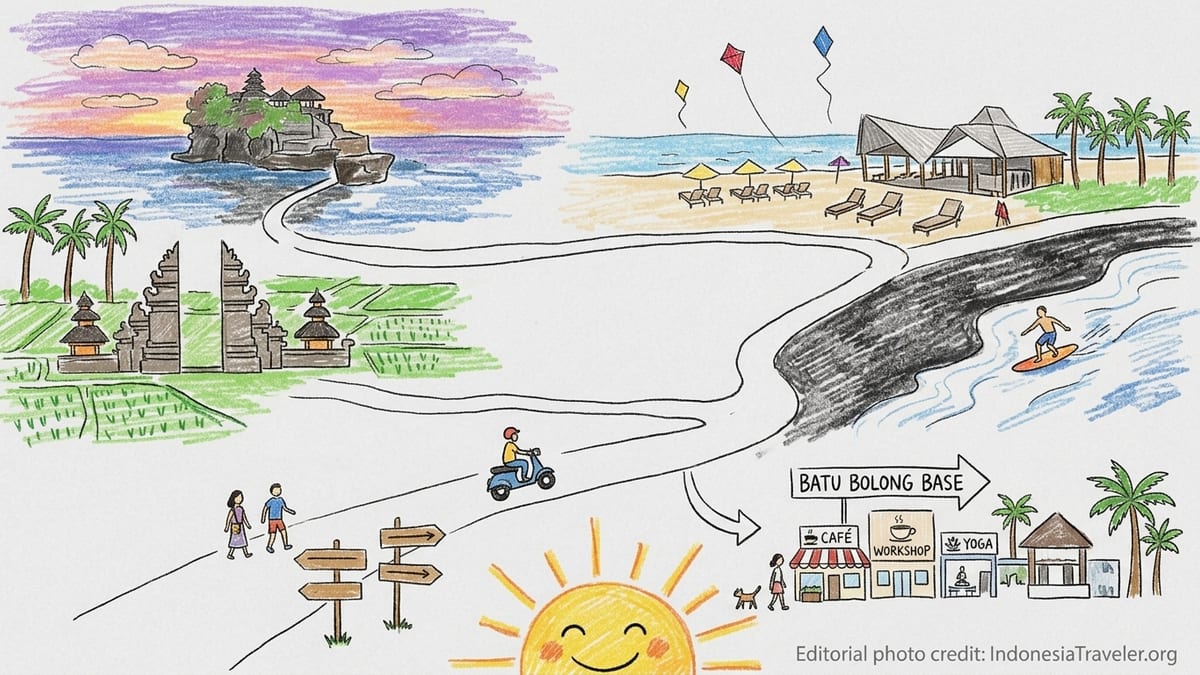
Canggu can be one of Bali’s most rewarding bases if you treat it as a cluster of walkable neighborhoods instead of a traffic jam you have to cross all day. This itinerary focuses on Batu Bolong, Echo Beach, Berawa, Pererenan and nearby Seseh, with one clear base, realistic transfer times, up to date costs and a flexible approach to surfing and beach clubs. It then expands to a five day plan that includes Tanah Lot and variations for visitors staying in Seminyak or looking for slower surf and café days.
Where to Base Yourself and How to Get Around
For a short Canggu stay it makes sense to pick one accommodation base and explore outward from there, instead of chasing “best area” lists. A practical choice for this itinerary is to stay within walking distance of Batu Bolong Beach, somewhere between the main Batu Bolong road and Jalan Pantai Batu Bolong. From here you can walk to Batu Bolong and Old Man’s surf breaks in 10 to 15 minutes, reach Echo Beach on foot or by a short scooter or app ride, and still travel across to Berawa or north to Pererenan in 15 to 30 minutes depending on traffic. This avoids being stuck inland without sidewalks or repeatedly crossing the shortcuts that often gridlock in late afternoon.
Canggu’s traffic is worst around sunset and on the main east west routes that connect Berawa, Batu Bolong and Pererenan. A drive from Batu Bolong to Berawa can take 10 to 15 minutes outside peak hours but stretch to 25 to 35 minutes when the shortcut near rice fields is clogged. App based rides with Grab or Gojek remain widely used around Seminyak and Canggu, but travellers report that drivers sometimes drop passengers just outside informal “no app” zones, so you may need to walk a few minutes and pay any cash surcharges directly. For simple hops within each cluster, many visitors still rely on scooters, either self ridden if they are experienced and licensed, or with local motorcycle taxis booked via apps.
Car based private drivers suit multi stop days like Tanah Lot. Resorts and hotels around Seminyak list sample prices that put a dedicated six hour Tanah Lot run by private car at around 700,000 to 900,000 rupiah for the vehicle, which becomes economical for couples or small groups. For local Canggu errands, app rides are usually cheaper, with recent reports of airport to Canggu rides around 200,000 rupiah and one hour in traffic. For this itinerary, a mix of walking, app rides and one pre booked driver day keeps costs predictable and stress lower.
Because this guide centers on one Batu Bolong base, restaurant and café suggestions are chosen so you can chain stops together without zigzagging across Canggu. If you choose to stay in Berawa instead, you can still follow the same logic by compressing Day 2 and expanding transfer windows slightly when heading to Batu Bolong, Echo or Pererenan.
Day 1: Batu Bolong & Echo Beach With Tide Smart Surfing
Day 1 is about getting oriented along the Batu Bolong to Echo Beach coastline. Start by checking the surf forecast the evening before on a reputable app and paying attention to tide times. Batu Bolong is one of Canggu’s most beginner friendly breaks, with a sandy bottom and softer rolling waves when the swell is moderate. Local surf schools typically time beginner sessions to mid to high tide when the take off zone is more forgiving. Morning lessons between roughly 7.30 and 10.30 or late afternoon slots can both work, depending on that week’s chart, so confirm when you book rather than locking in a random hour.
Several independent schools and beach based instructors operate at Batu Bolong. Recent published rates from small schools show group lessons in Canggu clustered around 400,000 to 500,000 rupiah per person for around two hours including board and rash guard, with private coaching roughly double that. One Batu Bolong based school lists group lessons at 390,000 rupiah and private at 490,000 rupiah, which is a useful benchmark. In practice, you will see handwritten boards on the sand offering similar prices; it is reasonable to expect to pay in that range in 2026, and you should always confirm what is included before you step into the water.
After your lesson, rinse off at the public showers near the beach and walk inland up Jalan Pantai Batu Bolong for breakfast or an early brunch. This strip now packs in café names that many travellers recognize, along with Indonesian warungs on the side streets. Choosing somewhere within a five to ten minute walk preserves the relaxed pace. A plate of nasi campur or a Western style brunch with coffee usually falls in the 80,000 to 160,000 rupiah range per person before tax and service, depending on how elaborate your order is.
Spend midday exploring Batu Bolong’s side streets and boutiques on foot. The cluster around the main road has small independent fashion labels, surf shops and homeware stores where you can browse without needing a scooter. If you want a mid afternoon break with air conditioning, choose a café or cowork style venue back from the beach where you can charge devices and plan the evening. Later, as the heat eases, either stroll north along the sand to Echo Beach in around 15 to 20 minutes or book a short app ride that takes roughly 10 minutes if traffic is flowing. Echo has a more surf focused, slightly rougher edge than central Batu Bolong, with black sand, rockier sections and stronger waves that attract intermediate surfers. For sunset, you do not need an expensive daybed. You can buy a drink at a modest beachfront bar, sit on the sand, or pick a mid range spot with beanbags instead of paying premium minimum spends in the most photographed venues. Expect a small local bar to ask for around 40,000 to 60,000 rupiah for a soft drink or small beer, while more polished bars may charge 100,000 to 160,000 rupiah for cocktails.
Day 2: Berawa Cafés, Fitness and a Single Beach Club Choice
On Day 2, stay on the Berawa side of Canggu to avoid multiple crossings of the busiest shortcuts. From a Batu Bolong base, allow 15 to 30 minutes by car or scooter to reach central Berawa, depending on time of day and whether congestion has built up around schools and cafés. Many visitors book a Grab or Gojek car mid morning when traffic has calmed slightly; fares for such a short hop are usually modest but can surge at peak times. Ask your driver to drop you near Berawa’s main café strip so you can cover the rest on foot.
Berawa has become known for its dense lineup of brunch cafés and casual restaurants. A simple strategy is to start the day with breakfast or coffee in this area so that you can then walk to fitness, wellness or creative activities nearby. Yoga studios, Pilates spaces and gyms often offer single class passes, with walk in prices commonly in the 150,000 to 250,000 rupiah bracket for a group session. A mid morning yoga or strength class is a good counterpoint to the previous day’s surfing and means you are not doing everything in the hottest part of the day.
After class and a light lunch, head toward Berawa Beach on foot or by a short ride. The shoreline here offers a mix of open public beach and a row of beach clubs that range from simple shacks to well known brands with pools and elaborate daybeds. For this itinerary, commit to just one venue to avoid a day that becomes an expensive photography crawl. If you choose the public beach, you will typically pay only for sun loungers or umbrellas if you want them, plus snacks and drinks. If you opt for a club, many advertise minimum spend per person that can run from around 300,000 rupiah to well above 1,000,000 rupiah for premium beds at peak times. Check current minimum spends on the day you go and decide honestly how long you plan to stay.
Sunset from Berawa often looks back toward Canggu’s main beaches and out to the Bukit Peninsula beyond. Staying in this cluster until after dark means you will face some traffic returning to Batu Bolong, so be patient and avoid rushing to another district for late night plans. Many people choose to eat dinner in Berawa itself before heading back, which spreads journeys across the evening. With one café breakfast, a fitness class, a simple lunch and drinks or dinner at a beach venue, a realistic day budget for food and basic activities here might sit in the 500,000 to 900,000 rupiah range per person, excluding any big daybed splurge.
Day 3: Pererenan, Seseh and a Calmer Coastal Mood
By Day 3 you will have a feel for how busy central Canggu can become. This is a good time to explore Pererenan and, if your transport allows, carry on toward Seseh, where development thins out and the atmosphere shifts. From a Batu Bolong base, Pererenan is about 10 to 20 minutes by car or scooter in reasonable traffic. The route feels immediately quieter than the Berawa shortcuts, with more roadside rice paddies still visible between villas and cafés.
Pererenan Beach has a more low key, village like feel than Batu Bolong, with a mix of local warungs, a few compact bars and a black sand shoreline watched by a coastal temple. The waves here often attract a mix of intermediate and advanced surfers. There is less of the beginner school scene you see at Batu Bolong, which is why this itinerary places your first lesson on Day 1. Spend the morning walking the promenade, watching the surf and pausing at one of the small beachfront spots for coffee or coconut. Prices tend to be slightly lower than at the most polished Batu Bolong venues, although anything with international brunch menus will still price in line with greater Canggu.
If you have a confident scooter rider in your group or have hired a driver for a half day, consider continuing northwest along the coast to Seseh. The ride from Pererenan to Seseh is short in distance but can take 15 to 25 minutes once you factor in narrow village lanes and occasional local traffic. In Seseh, rice fields press much closer to the ocean, and you can still find stretches of beach where only a handful of people pass in the late afternoon. Facilities are limited to a few local stalls and small accommodations, so this is more a place for walking and quiet time than a structured activities stop.
Weather matters here. On very hot or rainy days, you might shift more of your Day 3 time inland in Pererenan’s cafés and studios, which are increasingly mirroring the cowork and wellness options found in Batu Bolong. If heavy rain rolls in, the coastal paths can become slick and visibility poorer, so shorten beach walks and wait it out over a long lunch. Returning to Batu Bolong from Pererenan or Seseh usually takes 20 to 35 minutes by car in late afternoon. Plan to be back before the heaviest dinner rush unless you decide to eat in Pererenan, where restaurants skew a little more intimate and reservation friendly than the busiest central Canggu options.
Day 4: Tanah Lot Sunset from Canggu
Tanah Lot is one of Bali’s most famous sea temples and it does not sit inside Canggu, even if social media sometimes makes it look like a quick jaunt down the same beach. The temple stands in Beraban village in Kediri district, within Tabanan Regency, around 13 kilometers south of Tabanan town. From a Batu Bolong base you should allow 35 to 60 minutes by car each way depending on traffic, especially in the late afternoon when sunset visitors converge. This distance and timing mean Tanah Lot deserves its own focused half day rather than being bolted onto a full Canggu surf schedule.
The entrance fee for foreign visitors published on official and local sources in 2024 and 2025 sits around 75,000 rupiah per adult, collected at a main gate where you pay in cash. There is a separate small parking fee, often around 5,000 rupiah for cars and 3,000 rupiah for motorbikes, payable on entry to the wider complex. From the parking lots you walk through a market area that sells souvenirs and snacks before reaching the coastal viewing paths and the rock where the main temple stands. Most people take 10 to 15 minutes to stroll from their vehicle to the viewpoints, longer if they stop to shop.
For a Canggu based itinerary, the most efficient option is usually to book a private driver for the late afternoon and early evening. Hotels around the south of Bali list guide prices near 800,000 rupiah for a six hour Tanah Lot run, which gives a realistic benchmark for negotiation. That window allows for pickup from Batu Bolong, an unhurried drive to Tabanan, a few hours around the temple area including sunset, and then the return in after dark traffic. This may sound like a lot of transport for one sight, but it keeps the rest of your days free of long drives.
Weather and tides change how Tanah Lot looks. On calmer days at mid to low tide, visitors can sometimes walk closer to the rock base, while high tide and strong swell make the temple appear more dramatically offshore. If heavy rain is forecast for the afternoon, you may be better shifting your visit to a different day in your trip or focusing on inland temples closer to Ubud on another dedicated excursion day. Near Tanah Lot there are additional viewpoints and smaller sea temples along the cliffs that your driver can include if time and weather permit, but this should be framed as a supplement to the main visit, not a rushed series of photo stops.
Day 5: Flexible Surf, Workshops or Recovery Day
By Day 5 most travellers in Canggu appreciate a day with loose edges. Use this as either a second surf day, a creative or wellness workshop slot, or a simple café and recovery loop within whichever cluster you enjoyed most. If you felt progress in your Batu Bolong lesson, consider booking a second session there or at nearby breaks that suit your level. Pricing will resemble Day 1’s range, with multi lesson packages sometimes marginally cheaper per session than single bookings. Talk with your instructor about conditions and do not hesitate to skip or reschedule a session if the swell has jumped or storms are forecast.
Canggu has also become a base for short form workshops in pottery, jewelry making, breathwork, ice baths and other wellness trends. Many of these can be booked a day or two in advance and last two to three hours, usually costing somewhere between 250,000 and 700,000 rupiah depending on materials and instruction level. For a flexible itinerary, choose one morning or mid afternoon slot and keep the rest of the day unplanned. On wet days, these indoor or covered activities are a good way to feel you are still experiencing something local without mounting long transfers.
If your body is asking for rest after several days of activity, treat Day 5 as a café and reading day. Canggu’s clusters are made for slow coffee hopping. Base yourself at one spot with good seating and then shift once or twice to explore different menus and viewpoints. Two specialty coffee drinks and a light meal at each stop might bring your daily spend to around 350,000 to 600,000 rupiah per person, less if you focus on local warungs. Because this day is intentionally local, you avoid the hidden time cost of long car journeys, traffic bottlenecks and rushed photo stops far from your base.
This flexible day underscores one of the main themes of this itinerary. Trying to visit Ubud, central waterfalls, far flung temples and southern beaches from Canggu in rapid succession often leaves travellers stuck in cars for hours. Building in at least one day where you hardly leave your neighborhood shows how much variety actually sits within a few kilometers of your base.
One Day Canggu Plan from a Seminyak Base
If you are staying in Seminyak and only want to dip into Canggu for one day, you need to be even more deliberate about geography. Seminyak to Batu Bolong is not far on the map, roughly eight to ten kilometers, but traffic frequently stretches the drive to 35 to 60 minutes each way. This makes trying to “do all of Canggu” unrealistic in a single day. A smoother approach is to focus either on Batu Bolong and Echo Beach or on Berawa, both of which are closer to Seminyak than Pererenan or Seseh.
For a surf centric day, book a morning lesson at Batu Bolong with pickup or allow enough time for an app ride from Seminyak. Many visitors report that Grab and Gojek are practical in this corridor, but waiting times and exact drop off spots can vary due to local rules. Aim to be in the car by 7.00 or 7.30 to beat the worst congestion and arrive at the beach by around 8.00 or 8.30. Surf, brunch and a slow wander among Batu Bolong’s shops can easily fill the first half of your day without needing to cross further into Canggu.
In the afternoon, you can choose to remain in Batu Bolong and Echo Beach for sunset or switch once to Berawa for a different café and beach club scene. Do not try to add Pererenan, Seseh or Tanah Lot on the same day if you are based in Seminyak; each extra area adds at least another 20 to 40 minutes of driving in one direction. This defeats the aim of enjoying Canggu’s atmosphere and turns your visit into a car itinerary. When rain is forecast, you may even prefer to stay in Seminyak that day and reschedule Canggu for clearer weather, because the main appeal of these beaches is the open sky and light over the rice fields.
Budget wise, plan for the cost of the round trip Seminyak to Canggu transfer on top of the Canggu daily expenses already described. One app ride each way for two people, a surf lesson per person, café meals and a few sunset drinks can realistically land in the equivalent of several hundred thousand rupiah per person. This still compares favorably to booking a dedicated tour that only touches Canggu briefly between other south Bali stops.
Slow Surf and Café Variant for Three Days
Not everyone comes to Canggu for intense schedules. A slower three day variant follows the same clusters but reduces the number of moves and structured sessions. On Day 1, take a single surf lesson at Batu Bolong timed to mid tide and then spend the rest of the day moving no further than Echo Beach. You might surf early, eat brunch on the main road, then nap or read in your guesthouse before returning to the beach for sunset. This compresses walking distances and lets first time visitors adjust to Bali’s humidity and heat.
On Day 2, pick either Berawa or Pererenan and commit to just that cluster. For a café lover, Pererenan’s slightly quieter streets can feel calmer than the busy Berawa shortcuts. You can start with a leisurely breakfast, settle into one café for a few hours of work or reading, then take a mid afternoon walk to the beach and simply sit with a drink until sunset. Swapping structured fitness classes for gentle beach walks and light stretching on the sand keeps the day open ended.
On Day 3 of the slow variant, give yourself the option of not surfing at all. If your body feels good and conditions are kind, you can book a short follow up lesson or board rental in the morning. If not, you can focus on food and conversations, perhaps booking only a single workshop or massage session in the late afternoon. The main rule is that you do not cross between clusters more than once per day, and you give yourself full permission to skip popular attractions if getting there involves too many hours in a vehicle.
Even with this gentler pacing, keeping Ubud and Taman Ayun as separate excursion days remains important. The drive from Canggu to Ubud regularly takes 60 to 90 minutes each way in mixed traffic. Mengwi’s Taman Ayun Temple, often included in cultural circuits, is closer but still involves transfers inland that do not pair comfortably with surf sessions or long beach club afternoons. Treating these as stand alone day trips from Canggu or other bases avoids the trap of spending your supposed slow days racing between the coast and the interior.
The Takeaway
A three to five day stay in Canggu can be deeply rewarding if you think in terms of nearby clusters and energy levels rather than lists of “must see” attractions. Anchoring yourself in one Batu Bolong area base, you can spend Day 1 surfing and easing into the Batu Bolong to Echo Beach strip, Day 2 soaking up Berawa’s cafés and one carefully chosen beach venue, and Day 3 discovering the quieter mood in Pererenan and Seseh. Adding a focused Tanah Lot sunset trip on Day 4 and a flexible workshop or recovery day on Day 5 rounds out the experience without constant long transfers.
Trying to tag on Ubud, Taman Ayun, waterfalls and distant viewpoints to these same days often leaves travellers with more time in cars than on sand. Ubud’s art markets, rice terraces and temples justify a full dedicated day or even a multi night stay, and Taman Ayun fits more naturally into an inland or cultural itinerary than as an afterthought to a Canggu surf morning. Recognizing this keeps your Canggu segment grounded in its real strengths: surfable waves, layered café culture, believable sunsets and the subtle shift from buzzy Batu Bolong streets to the quieter lanes toward Seseh.
In cost terms, a traveller who surfs twice, visits one beach club with a moderate minimum spend, eats mostly at mid range cafés and warungs, and books one private driver afternoon to Tanah Lot might expect to spend in the region of 800,000 to 1,500,000 rupiah per person per day, depending on accommodation, drinks and shopping. Staying largely within Canggu for three of those days cuts out repeated long transfers, reduces surprise taxi bills and opens up more real interactions with the neighborhoods you are staying in.
Ultimately, the value of three locally focused days is not just financial. When you are not racing north to Ubud in the morning and south to clifftop viewpoints by late afternoon, you are more likely to notice the small things that make this corner of Bali distinct: the offerings placed at driveway entrances at dawn, the farmers tending remaining rice plots between villas, the mid day lull when cafés empty in the heat, and the pattern of locals heading to the shore in the evening. Those rhythms are harder to feel from the back seat of a car. Staying present in one part of the island, even briefly, often leaves a stronger memory than ticking off a long list of distant attractions.
FAQ
Q1. Is Canggu a good base for first time visitors to Bali?
Canggu works well for first time visitors who are comfortable with café culture, scattered development and some traffic. It offers surfable beaches, many dining options and easy access to other south Bali areas, but it is not a compact, traditional village. Those wanting a quieter or more historic atmosphere might prefer to split time between Canggu and Ubud or smaller coastal towns.
Q2. When is the best time of day to take a surf lesson in Canggu?
Surf schools in Canggu usually time beginner lessons to mid to high tide and moderate swell, often in the early morning or late afternoon. Rather than fix a time before you arrive, check a reliable surf forecast for Batu Bolong the day before and ask the school which slot matches your level and safety. This approach respects real conditions instead of assuming every day looks the same.
Q3. How much should I budget for a surf lesson in Canggu in 2026?
Recent published prices suggest group surf lessons around Canggu cost roughly 400,000 to 500,000 rupiah per person for about two hours, including board and rash guard. Private lessons often fall near 900,000 to 1,000,000 rupiah per session. Some camps sell packages that reduce the per lesson rate slightly. Always confirm what is included, as some prices cover transport to the break while others are beach based.
Q4. Can I visit Tanah Lot and still have a full beach day in Canggu?
It is technically possible to surf in the morning and visit Tanah Lot for sunset on the same day, but that combination can feel rushed. The drive between Batu Bolong and Tanah Lot usually takes 35 to 60 minutes each way in traffic, plus time walking through the complex. Treating Tanah Lot as a dedicated half day, ideally on Day 4 of a longer stay, leads to a more relaxed experience and avoids cutting your Canggu beach time into short fragments.
Q5. Are Grab and Gojek reliable in Canggu and Seminyak?
Travel reports from 2025 and 2026 indicate that Grab and Gojek are widely used around Seminyak and Canggu, with typical waits of a few to several minutes in busy areas. However, local rules and informal agreements mean drivers may sometimes drop you slightly outside certain zones and request part of the payment in cash. Availability late at night can vary, so for specific plans or airport transfers it is wise to have a backup option such as a pre arranged driver.
Q6. Why should Ubud or Taman Ayun be separate day trips from Canggu?
The road distance between Canggu and Ubud translates into 60 to 90 minutes or more in each direction in normal traffic, and reaching Taman Ayun in Mengwi also involves inland roads. Trying to squeeze either destination into the same day as multiple Canggu beach activities often results in three or more hours spent in vehicles. Keeping these inland spots as stand alone excursions respects their depth and maintains a calmer rhythm for your Canggu days.
Q7. How much does a realistic day in Canggu cost without luxury splurges?
For a mid range traveller staying in a comfortable guesthouse or hotel, a realistic daily budget in Canggu might fall around 800,000 to 1,500,000 rupiah per person. This would cover three café or warung meals, one surf lesson or fitness class on activity days, a few drinks, short app rides between clusters, and a share of occasional private driver costs. Spending climbs quickly when you add high minimum spend beach clubs or extensive shopping.
Q8. Is it necessary to rent a scooter in Canggu?
Renting a scooter is not strictly necessary, but many visitors find it convenient. Experienced riders with valid licenses gain flexibility and can move between Batu Bolong, Berawa and Pererenan in 10 to 20 minutes. Those unfamiliar with scooter riding or uncomfortable with traffic can rely on walking within each cluster and use Grab or Gojek cars or bikes for longer hops. For safety and legal reasons, you should not learn to ride in Canggu’s traffic for the first time.
Q9. What happens if it rains heavily during my Canggu stay?
Heavy rain in Canggu usually comes in short bursts, especially in the wet season. On such days, beach time and surfing may be less appealing or safe, but cafés, cowork spaces, yoga studios and workshops continue to operate. Keeping one flexible day in your itinerary for indoor or covered activities makes it easier to adjust. For outdoor heavy rain, you can shorten beach walks and wait out showers in nearby venues rather than committing to long drives inland.
Q10. Is three days in Canggu enough, or should I plan five?
Three days are enough to experience Batu Bolong, Echo Beach, Berawa and Pererenan in a focused way if you cluster activities and avoid over scheduling. Five days allow you to add a dedicated Tanah Lot sunset trip and a flexible workshop or recovery day without sacrificing beach time. The choice depends on how much of Bali you hope to see, but many travellers find that a tightly planned five day Canggu stay feels more relaxed than a shorter visit packed with distant excursions.