


Canggu has become one of Bali’s busiest destinations, yet it is not a compact little beach town you can easily cross on foot. It is a coastal strip of several Balinese villages, rice fields and rapidly built villas stretched along about eight kilometres of shoreline. Surf breaks, beach clubs, family villas, co-working spaces and temple courtyards all share the same narrow roads. Understanding how Canggu is laid out, how people actually move around and how local culture still shapes daily life will make the difference between a frustrating visit and a rewarding one.
Understanding Canggu’s Real Geography
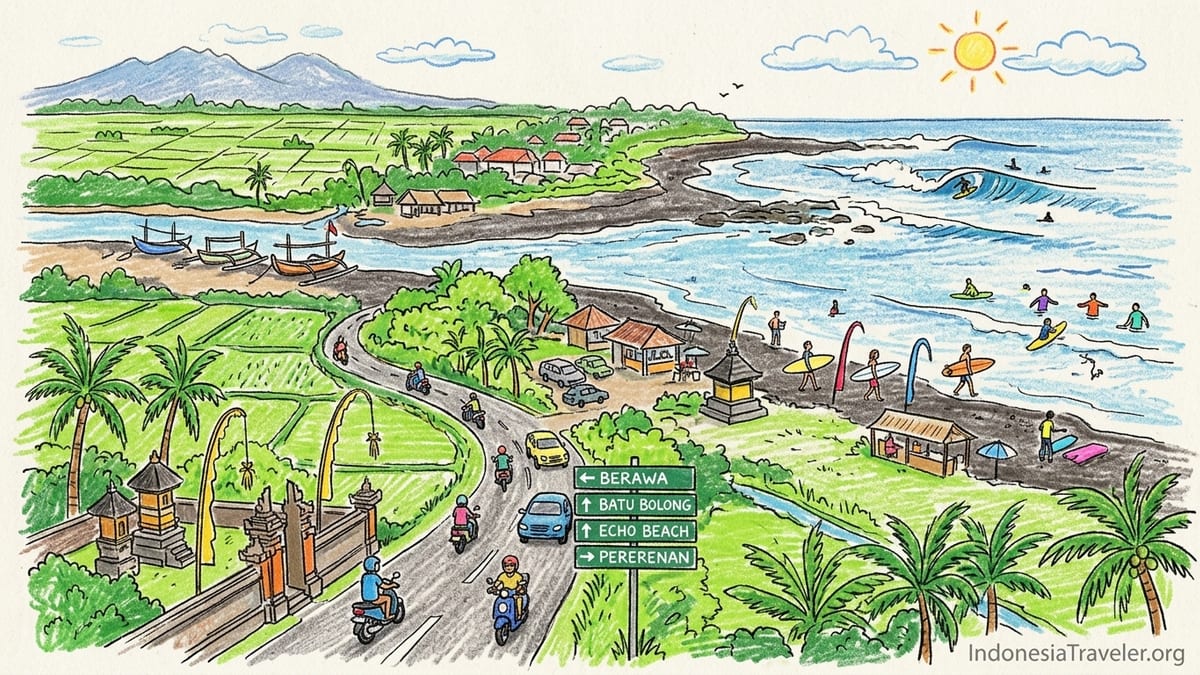
On booking sites and social media, Canggu is often shown as a single pin on the map, as if you could walk from one end to the other in ten minutes. In reality, what most people call Canggu covers several coastal villages in North Kuta and adjoining parts of Mengwi. From Berawa in the south to Cemagi in the north, you are looking at a drive of roughly 20 to 30 minutes in light traffic and sometimes much longer during peak hours. The area is laced with rice fields, rivers and small lanes, so there is rarely a straight, simple walking route between the places you see online.
Different parts of this coast have distinct characters. Batu Bolong is the densest hub of cafes, beginner surf schools and nightlife, anchored by the main road Jalan Batu Bolong and its beachfront temple and car park. Just north is Batu Mejan, better known as Echo Beach, a more wave-focused area with reefy surf peaks and a mix of small guesthouses and upscale villas. To the south of Batu Bolong, Nelayan Beach and Berawa link Canggu to the Petitenget and Seminyak area through separate village administrations but continuous urban development.
Crossing the river to the north, Pererenan has quickly turned into a second main strip, with mid to high-end restaurants, boutique hotels and villa complexes backing onto the remaining rice fields. Beyond Pererenan, the villages of Seseh and Cemagi still feel more residential and agricultural, with shrines, family compounds and rice terraces coming much closer to the sea, although villa construction is picking up here as well. Booking platforms often list accommodation in Pererenan, Seseh and even Cemagi under “Canggu” to tap into its name recognition, so always check the detailed map location before you confirm.
Distances that look small on a map can be deceptive once you factor in bridges, one-way systems and traffic engineering. For example, staying in Berawa but planning to surf daily at Pererenan will mean regular scooter or car journeys of at least 15 to 25 minutes each way, even though the beaches face the same stretch of ocean. Choosing your base within Canggu based on surf level, nightlife tolerance and how much you want to move around each day is more important here than in many compact resort towns.
Beaches, Surf and Swimming Safety
Canggu’s shoreline is one long run of dark volcanic sand broken up by river mouths and clusters of rocks, but each beach has its own profile. Batu Bolong has one of south Bali’s better-known beginner surf spots, with longboard-friendly waves in small to moderate swells and a line-up full of surf schools offering board rental and lessons. You will see families and first-time surfers stacking boards by the wall near the temple car park and instructors in coloured rash vests helping guests catch their first rides in the whitewater. It feels lively and social rather than hardcore.
Just to the north, Echo Beach leans more toward intermediate and advanced surfers. The waves here break over a patchy reef and the take-off zones can be crowded with experienced riders at dawn and late afternoon. On days when Batu Bolong looks like soft rolling lines, Echo Beach might be offering steeper faces and quicker sections. A few hundred metres further north, Pererenan has additional peaks that attract longboarders and shortboarders depending on conditions. Berawa to the south can offer punchier beach breaks than Batu Bolong and often draws a mix of locals and visitors looking for something less concentrated than the main “Old Man’s” surf area.
Despite the popularity of these beaches, none of them should be treated as universally safe swimming beaches. Currents can be strong, especially near the river mouths at Nelayan and Pererenan, and submerged rocks or reef shelves sit close to the surface at Echo Beach and parts of Berawa and Pererenan. Lifeguards are present only on some stretches and patrol hours can change seasonally. After heavy rain in the wet season, visibility drops and floating debris can make swimming more hazardous. If you are not a confident ocean swimmer, stay in the shallows, follow any lifeguard or village security instructions and avoid entering the water at unpatrolled spots when the surf is large or messy.
Swimming conditions also change with the seasons. From roughly May to September, offshore winds and drier weather often produce cleaner surf and clearer water, though currents are still present. From about November through March, wetter conditions bring river runoff into the sea, sometimes creating brown plumes and carrying plastic, branches and other rubbish onto the shore. Locals and community groups organise beach clean-ups but there can still be days when swimming is less appealing. Planning your activities flexibly and treating the ocean with caution is wise throughout the year.
Village Pockets: From Batu Bolong to Cemagi
Batu Bolong has become Canggu’s default centre of gravity. Jalan Batu Bolong is lined with brunch cafes, small boutiques, barber shops, spas and co-working spaces, with steady foot traffic in the early morning and late afternoon. The beachfront car park is flanked by simple warungs and more polished bars where sunset drinks and live music are common. Because of its mix of surf schools, casual nightlife and walkable cluster of restaurants, Batu Bolong suits first-time visitors and solo travellers who want to stay in the heart of the action and do not mind some late-night noise.
Echo Beach, slightly further north, feels looser and more spread out. The original sea wall and warung cluster above the main reef break has changed in recent years as erosion and redevelopment have reshaped the coastline, but the atmosphere remains more surf-focused than Batu Bolong. You will find a patchwork of small hotels, villas down narrow lanes and a growing number of mid-range restaurants connecting toward Pererenan. Streets are narrower and pavements often disappear, so walking at night requires attention. Echo Beach is a better fit for travellers who prioritise accessing stronger waves and do not need as many shops or co-working spaces at their doorstep.
To the south, Berawa sits closer to Seminyak and has become an intense zone of commercial development. Large beach clubs with pools and daybeds, multi-storey cafes, international schools and co-working complexes cluster around main roads such as Jalan Pantai Berawa. Traffic here can feel busy from school run hours through sunset, and real estate is dense, with apartments, villas and shops stacked closely together. Berawa suits digital workers and long-stay visitors who are happy to live in a very urbanised environment with many services within a short scooter ride, from international supermarkets to boutique gyms and kids’ play centres.
North of the river, Pererenan offers a slightly more relaxed feel while changing quickly. Upscale restaurants, wine bars and boutique hotels have opened along Jalan Pantai Pererenan and connecting streets, and rice fields now sit beside new villa complexes. Pererenan Beach shares surf peaks with the Echo Beach area but its village core still includes family compounds, small warungs and regular temple ceremonies. Beyond Pererenan, Seseh and Cemagi remain quieter, with fewer beach clubs and more local fishing activity. Simple warungs serve coffee and fried snacks near small parking areas, and visitors gather to watch sunset over rocky points backed by village temples. Accommodation here trends toward standalone villas and small retreats rather than hotels, making these areas good bases for people seeking coastal scenery with easier access to village life.
Balinese Culture Among Rice Fields and Beach Clubs
However international Canggu’s cafes and bars may feel, the area remains part of Balinese village life. Each banjar, or neighbourhood organisation, handles community matters from temple upkeep to traffic control during ceremonies. When you see bamboo poles and temporary shrines going up beside the road, it often signals preparations for a local religious event. On ceremony days, processions in traditional dress move toward sea temples along Batu Bolong, Pererenan, Seseh or Cemagi, and roads may be partially closed or slowed as offerings are carried to the shore.
Temples sit right beside some of the busiest surf and nightlife spots. Pura Batu Bolong is just steps from surfboard racks and beach bars, while temple compounds near Pererenan, Seseh and Cemagi face straight onto the ocean where visitors take photos of dramatic rock formations at sunset. Dress codes require a sarong and sash inside temple grounds and visitors are often restricted during major ceremonies. Local villagers rely on tourist income but also expect respect for sacred spaces, so using quieter tones near shrines, avoiding drone flights over ceremonies and not climbing on temple walls help keep relations positive.
Rice fields still remain between clusters of villas, particularly around Pererenan and the inland parts of Berawa and Seseh, though they are shrinking as construction continues. Small paths used by farmers and motorbikes weave between paddies, and you may still see ducks being herded along irrigation channels or farmers working in conical hats at sunrise. Local fishing continues from simple wooden boats and shorelines in Seseh and Cemagi. Early in the morning, fishermen return to small concrete ramps beside temples, and fish are sold directly to local households or warungs.
Visitors share narrow village roads not only with taxis and scooters but also with temple processions, schoolchildren and offerings placed on the ground. It is common to see small woven trays filled with flowers and rice on doorway thresholds and even near the entrances of international restaurants. Watching for these offerings, slowing down and giving space for processions to pass and keeping music volumes reasonable when staying in residential lanes are simple ways to travel in Canggu without overwhelming the communities that host you.
Traffic, Transport and How to Get Around in 2026
Traffic is not just an occasional annoyance in Canggu. It is a structural outcome of narrow village roads, rapid development and limited alternative routes. Authorities in Badung Regency and Bali’s traffic police have worked on measures such as new shortcut roads between Canggu and surrounding areas and one-way systems in congestion hotspots. In 2025 a one-way scheme was introduced on some of the main access roads in Canggu to relieve bottlenecks at key junctions, and in 2026 the Badung transport department signalled plans to extend traffic engineering in Berawa and Canggu. These changes can improve flow in some areas but also lengthen certain journeys, so navigation apps quickly become essential tools rather than optional add-ons.
From Bali’s Ngurah Rai International Airport to central Canggu, the drive in 2026 typically takes around 60 to 90 minutes by car, depending on time of day and whether you are heading to Berawa, Batu Bolong or Pererenan. Official taxi counters inside the arrivals area quote regulated fares to zones such as Canggu, and many visitors now arrange private car transfers in advance through hotels or transport companies. Prices for a one-way private airport transfer to Canggu often fall in the range of roughly 250,000 to 400,000 rupiah depending on time, vehicle size and exact destination, though you should confirm current rates directly with your provider before travel.
Within Canggu, ride-hailing services such as Grab and Gojek operate for both cars and scooters, though access can be restricted at the immediate entrances of some beach clubs or hotels where local transport groups control the area. In practice, most visitors use the apps to get picked up or dropped off a short walk from busy corners if drivers indicate local restrictions. For sightseeing days, both apps also offer driver-by-the-hour options, where a car with driver can stay with you for a set period, which can be more efficient than booking multiple short trips.
Renting scooters remains common but carries important legal and safety considerations. Indonesian regulations require a valid motorcycle licence, and foreign visitors are expected to hold a licence from their home country that covers motorcycles plus an appropriate international driving permit if their country issues one. Local police and provincial authorities have periodically reminded visitors that riding without the right licence can result in fines and issues with insurance cover in the event of an accident. Helmets are legally required, and police have carried out sweeps focusing on traffic violations and unlicensed riders. If you do not already ride confidently at home, learning in Canggu’s traffic is risky, and using cars or motorcycle taxis is usually a better option.
Walking in Canggu has clear limitations. Around the central strips of Batu Bolong and parts of Berawa and Pererenan you can walk between clusters of cafes, shops and the beach within 10 to 20 minutes. Beyond these pockets, pavements often vanish, roadside drainage channels are uncovered in places and traffic passes very close. Distances between different beaches and inland neighbourhoods are longer than they appear on a simple map. For most visitors, Canggu is a place where you walk within small neighbourhoods but rely on vehicles to move between them.
Visas, Tourist Levy, Seasons and Beach Conditions
Entry rules for Indonesia can change, so always check official sources close to your departure date. As of late 2026, many nationalities can obtain a visa on arrival or an electronic visa on arrival that is typically valid for a stay of up to 30 days, extendable once. Longer stays for remote work or multiple entries require different visa types arranged in advance. All travellers need a passport valid for at least six months beyond arrival and a ticket showing onward or return travel. Health-related entry rules introduced during the pandemic have eased in most cases, though you may still be asked to complete an electronic customs or arrival form within a set window before arrival.
In addition to visa fees, Bali now charges a provincial tourist levy for foreign visitors. This levy is set at 150,000 Indonesian rupiah per person and is collected once per visit to Bali, separate from any national visa or entry fee. It came into effect on 14 February 2024 with the aim of supporting cultural preservation, environment and infrastructure. The provincial government encourages visitors to pay online before arrival, but payment is also possible at designated points such as the airport and some partner businesses. Inspections were announced as part of enforcement, and by 2026 travellers report that officers can ask to see proof of payment when visiting certain attractions or during spot checks.
Bali’s climate divides roughly into a dry season from about April or May through September and a wetter season from about November through March. In Canggu, the dry months usually bring more consistent surf and clearer sunsets, though trade winds can make the coast breezy and waves stronger, particularly for beginners. The wet season often means afternoon downpours, higher humidity and periods of wind that switch direction, affecting wave quality. These seasonal patterns are shifting slightly year by year, so talking with local surf schools or guides on arrival is useful if you plan your days around conditions.
One visible impact of the rainy season on Canggu is beach debris. Heavy rains wash rubbish and organic material from rivers into the sea, and currents push it onto the coastline. After big storms between roughly December and February you may see lines of plastic waste, logs and vegetation along Batu Bolong, Berawa, Pererenan and beyond. Local businesses, village groups and volunteers often organise clean-ups, but there can be days when the ocean simply looks uninviting. If this is a priority factor for you, planning your stay for the later dry season months such as June to early September can reduce the chances of encountering the heaviest debris.
Where to Stay, Eat and Go Out
Canggu’s accommodation stock is dominated by small villas, guesthouses and apartment-style complexes rather than large seafront resorts. In Batu Bolong and Berawa, you will find compact hotels with pools, co-living spaces and studio apartments aimed at long-stay guests who want walking access to cafes and co-working hubs. Prices range widely based on facilities and season, from simple fan rooms in guesthouses located on back streets to private pool villas rented by the month for remote workers or families. Pererenan, Seseh and Cemagi skew more toward stand-alone villas tucked into residential lanes, where staying means quieter nights but reliance on scooters or cars for everyday errands.
The dining scene reflects Canggu’s position as a long-stay and lifestyle hub. Along Batu Bolong, Berawa and Pererenan you can eat avocado toast and speciality coffee at breakfast, Indonesian warung dishes at lunch and wood-fired pizza or Middle Eastern plates at dinner. Some cafes run set lunch deals that appeal to remote workers, while others focus on plant-based menus or local ingredients. Traditional Balinese food is easiest to find in small warungs and night-time nasi campur stalls along side streets, so looking beyond the main Instagram-famous venues can provide a more varied sense of local flavours.
Nightlife has several faces in Canggu. Batu Bolong hosts bars with live bands, DJ sets and events that can run into the early hours, particularly nearer the beach. Berawa’s beach clubs and rooftop bars host pool parties, sunset DJ sessions and themed nights that draw both visitors and residents from around south Bali. Pererenan’s evenings are more low-key, centred on wine bars, small restaurant gatherings and sunset drinks at the beach. Seseh and Cemagi remain quiet, with only a few small bars and warungs staying open late. As development continues, sound carries easily across dense villa districts, so checking recent guest reviews for comments on noise around your chosen accommodation is wise.
Canggu also has a strong wellness and fitness scene. Yoga studios, CrossFit-style gyms, boxing centres and pilates spaces operate across Batu Bolong, Berawa and Pererenan, some with class passes and membership packages suited to multi-week stays. Co-working spaces provide meeting rooms and day passes alongside stable internet and air conditioning, which has helped anchor Canggu’s reputation as a base for digital workers. These facilities, combined with nearby international schools, also support a resident expatriate population who navigate daily routines alongside short-term visitors.
How Long to Stay and Who Canggu Suits
For a two-night stay, Canggu works best as a focused snapshot rather than a broad exploration. Base yourself in Batu Bolong or Berawa to minimise time lost in road traffic. Spend your arrival afternoon walking to the nearest beach, watching sunset and dining within the same neighbourhood. The full day in between can include a beginner surf lesson at Batu Bolong, a slow lunch and a sunset drink at a beach bar. Use ride-hailing for any evening plans and accept that you will only experience a slice of Canggu’s spread-out coast.
With three nights, you can add one half-day for exploring another village pocket. For example, you might stay in Pererenan, enjoy its restaurants for two evenings and use one late afternoon to visit Batu Bolong for a busier sunset scene. Alternatively, base in Berawa for ready access to big beach clubs and cafe culture, then set aside one morning to explore the quieter rice fields and coastal paths around Seseh or Cemagi with a private driver. Three nights also feels like the minimum for testing whether Canggu’s traffic patterns and nightlife energy fit your travel style.
A five-night stay suits digital workers, surfers and couples or friends who want a balance of routine and exploration. You can establish a rhythm of morning surf or gym, mid-day work or rest and alternating evenings between Batu Bolong, Berawa and Pererenan. One full day could be dedicated to a trip inland to places such as Ubud or the rice terraces of Tegalalang with a driver, returning to Canggu for dinner. Another could focus on cultural experiences closer to hand, like visiting nearby sea temples outside ceremony hours or walking the back roads behind Pererenan and Seseh to see remaining rice fields.
Seven nights or longer works well for long-stay travellers, remote workers and families who want to settle into a particular neighbourhood. Over a week you can learn which side streets ease traffic pressure, develop relationships with local warungs and understand temple ceremony rhythms that affect noise and road closures. Canggu as a base makes most sense for travellers who value a high concentration of cafes, gyms, co-working spaces and surfable beaches more than they value quiet roads or easy walking. If your priority is serenity, hill views and slower village life, areas such as Sidemen, parts of East Bali or rural sections around Ubud offer calmer alternatives, with Canggu better suited as a two or three night add-on at the start or end of a Bali trip.
The Takeaway
Canggu in 2026 is not a sleepy surf village and not a simple, walkable resort town. It is a busy coastal district made up of several Balinese villages where temples, rice fields and fishing boats share space with beach clubs, co-working spaces and villa complexes. Batu Bolong and Berawa concentrate the busiest surf schools, nightlife and cafe culture, Echo Beach and Pererenan anchor more wave-focused and restaurant-oriented communities, and Seseh and Cemagi still offer quieter coastal scenery while development advances.
Understanding entry rules, the provincial tourist levy, traffic management efforts and the realities of transport and walking will help you set realistic expectations. Recognising that none of Canggu’s beaches is a guaranteed safe swimming area and treating the ocean with caution is essential. Giving space to Balinese culture through respectful behaviour around temples, ceremonies and offerings turns a hectic visit into a more meaningful stay.
Canggu suits travellers who value energy over ease: surfers comfortable with variable conditions, remote workers who appreciate a dense ecosystem of cafes and co-working options, and visitors who enjoy busy bar and restaurant scenes. For families and quieter travellers, choosing specific neighbourhoods such as Pererenan, Seseh or Cemagi and planning journeys carefully can deliver a more relaxed experience. For those seeking deep quiet, cleaner mountain air and empty roads, Bali’s less developed regions remain a better match, with Canggu serving as a gateway to arrive, acclimatise and perhaps catch a few waves before exploring the rest of the island.
FAQ
Q1. Is Canggu a single town I can explore entirely on foot?
Canggu is a spread-out coastal district made up of several villages. You can walk within neighbourhood pockets like Batu Bolong or parts of Berawa and Pererenan, but moving between beaches and villages usually requires a scooter, car or ride-hailing service.
Q2. Which part of Canggu is best for beginner surfers?
Batu Bolong is the main beginner-friendly surf area, with plenty of surf schools, soft waves in small to moderate swells and longboard rentals directly on the beach. Conditions vary daily, so always ask local instructors about safety before entering the water.
Q3. Are Canggu’s beaches safe for swimming?
No beach along this coast is universally safe for swimming. Currents, changing sandbars, rocks and reef all affect conditions. Some stretches have lifeguards, but you should treat the ocean cautiously, avoid river mouths and rough days, and follow any flags or local advice.
Q4. How long does it take to get from Bali’s airport to Canggu?
The drive from Ngurah Rai International Airport to Canggu usually takes about 60 to 90 minutes by car, depending on traffic and whether you are staying in Berawa, Batu Bolong or Pererenan. At very busy times, especially around sunset, journeys can take longer.
Q5. Do I need a motorcycle licence to ride a scooter in Canggu?
Yes. Indonesian regulations require a valid motorcycle licence, and foreign riders are expected to hold a motorcycle licence from their home country plus an appropriate international driving permit. Riding without the right licence can lead to fines and problems with insurance if an accident occurs.
Q6. What is the Bali tourist levy and how do I pay it?
The Bali tourist levy is a provincial fee of 150,000 rupiah per foreign visitor, paid once per trip to Bali and separate from any visa costs. The government encourages payment online before arrival, though there are also payment points at the airport and some partner businesses.
Q7. When is the best time of year to visit Canggu?
Many visitors prefer the drier months from around May to September for more reliable surf conditions, less rainfall and reduced beach debris. The wetter months from roughly November to March can still be enjoyable but bring heavier downpours and more rubbish washed onto the beaches after storms.
Q8. Which part of Canggu is quieter for families?
Pererenan, Seseh and Cemagi tend to be quieter than Batu Bolong and central Berawa, with fewer late-night venues and more space between properties. Families who do not mind relying on cars or scooters to reach shops and attractions often choose villas in these areas.
Q9. Is ride-hailing available in Canggu?
Yes, app-based services such as Grab and Gojek operate in and around Canggu for both cars and scooters. In some specific spots near beaches or certain hotels, local transport groups may limit direct access, so drivers might ask to meet a short walk away from busy corners.
Q10. How many nights should I plan in Canggu on a Bali trip?
Two nights offers a quick taste focused on one neighbourhood, three to five nights allow time for surfing, dining and a side trip inland, and a week or more suits remote workers and long-stay visitors. If you prefer very quiet surroundings, consider limiting time in Canggu and spending more nights in calmer parts of Bali.